
 Image 1 of 3
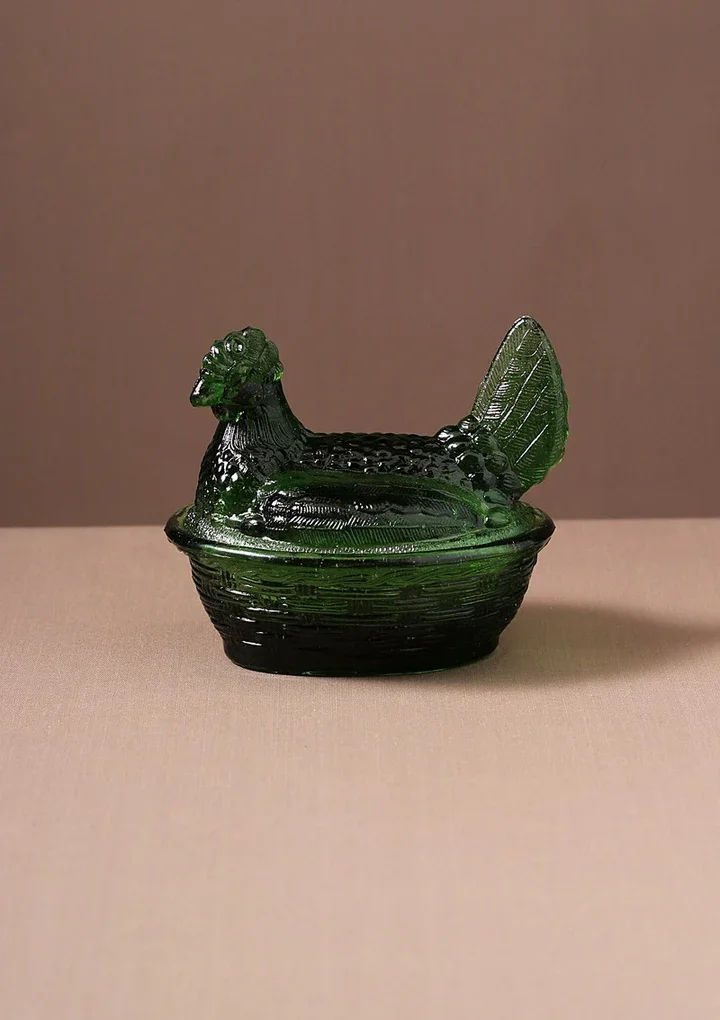 Image 2 of 3
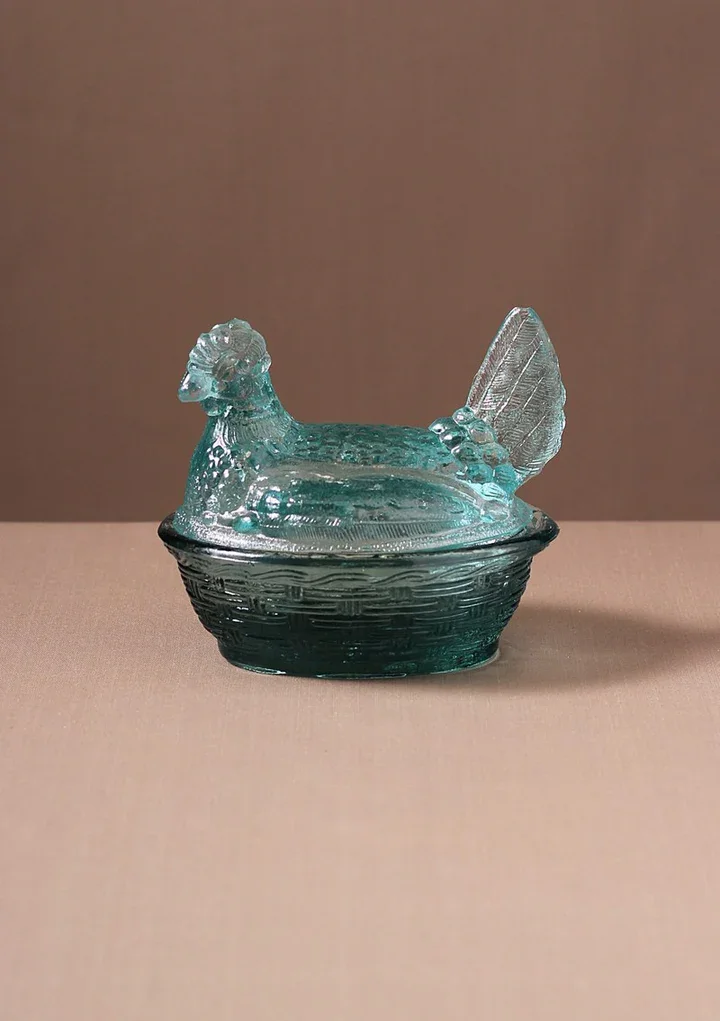 Image 3 of 3
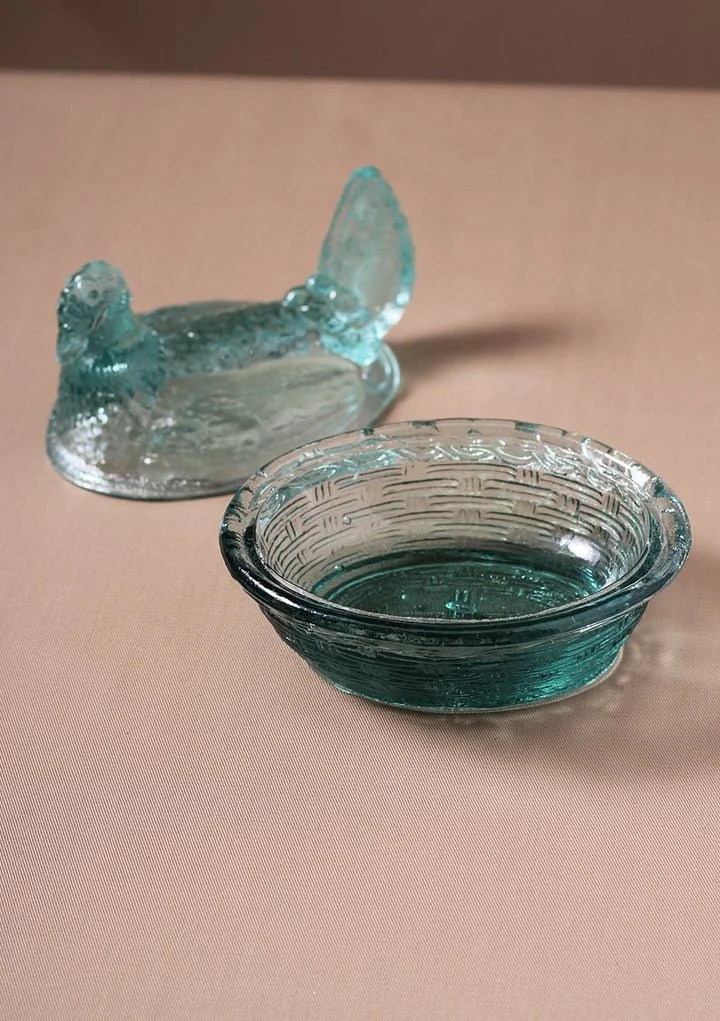
Conocida como “gallina en el nido”, llegó a México principalmente a través del comercio internacional a finales del siglo XIX y principios del XX. Después de originarse en Staffordshire, Inglaterra, el diseño se difundió por distintos mercados occidentales mediante la producción industrial de vidrio prensado, especialmente durante la época victoriana y más tarde en el periodo de la Gran Depresión, cuando eran objetos decorativos accesibles. Con el tiempo se volvieron comunes en hogares mexicanos como dulceros, mantequilleras o recipientes decorativos, sobre todo en zonas del norte y centro del país. Muchas de las piezas que hoy se encuentran en México se consideran coleccionables. Para mí (Lucy), crecí viendo el juego de mi abuela y ¡siempre he querido conseguir uno!
_________________
Known as the “hen on a nest,” it arrived in Mexico mainly through international trade in the late 19th and early 20th centuries. After originating in Staffordshire, England, the design spread across Western markets through the industrial production of pressed glass, especially during the Victorian era and later during the Great Depression, when such objects were affordable decorative items. Over time they became common in Mexican households as candy dishes, butter dishes, or decorative containers, particularly in the northern and central regions of the country. Many of the pieces found in Mexico today are considered collectible. For me (Lucy) I grew up seeing my grandmother’s set and have always wanted get my hands on a set!
Conocida como “gallina en el nido”, llegó a México principalmente a través del comercio internacional a finales del siglo XIX y principios del XX. Después de originarse en Staffordshire, Inglaterra, el diseño se difundió por distintos mercados occidentales mediante la producción industrial de vidrio prensado, especialmente durante la época victoriana y más tarde en el periodo de la Gran Depresión, cuando eran objetos decorativos accesibles. Con el tiempo se volvieron comunes en hogares mexicanos como dulceros, mantequilleras o recipientes decorativos, sobre todo en zonas del norte y centro del país. Muchas de las piezas que hoy se encuentran en México se consideran coleccionables. Para mí (Lucy), crecí viendo el juego de mi abuela y ¡siempre he querido conseguir uno!
_________________
Known as the “hen on a nest,” it arrived in Mexico mainly through international trade in the late 19th and early 20th centuries. After originating in Staffordshire, England, the design spread across Western markets through the industrial production of pressed glass, especially during the Victorian era and later during the Great Depression, when such objects were affordable decorative items. Over time they became common in Mexican households as candy dishes, butter dishes, or decorative containers, particularly in the northern and central regions of the country. Many of the pieces found in Mexico today are considered collectible. For me (Lucy) I grew up seeing my grandmother’s set and have always wanted get my hands on a set!